
Relationship building doesn’t have to be hard and science shows us that spending even five minutes connecting can significantly increase our well being and the power of our networks
New York, New York / September 28, 2026 – Our modern life is a study in disconnection. Somehow, we’re busier than we’ve ever been, but we see people less, talk to people less and think less than we did in the past. When was the last time you actually spoke to your friends and didn’t just add to an ongoing stream of group text chats, shared TikTok videos or “I miss you” texts?
Similarly in the professional arena, slack messages and Teams calls have taken the place of actual collaboration. We’ve offloaded everything from notetaking to critical thinking to ChatGPT or AI agents in the name of efficiency, while also adding one more layer of plausible deniability if anything goes wrong or a communication falls flat.

Our modern life is a study in disconnection. Somehow, we’re busier than we’ve ever been, but we see people less, talk to people less and think less than we did in the past. When was the last time you actually spoke to your friends and didn’t just add to an ongoing stream of group text chats, shared TikTok videos or “I miss you” texts?
Similarly in the professional arena, slack messages and Teams calls have taken the place of actual collaboration. We’ve offloaded everything from notetaking to critical thinking to ChatGPT or AI agents in the name of efficiency, while also adding one more layer of plausible deniability if anything goes wrong or a communication falls flat.
These were supposed to be modern conveniences, and in some cases they can be. But they also get you out of your body, offload your consciousness, and keep you at least an arm’s length away from actual connections. The kinds of connections that keep friendships strong and build professional networks that could lead to your next big career move.
Some people are already noticing the impact of missed connections on their lives. A recent article in The Cut entitled “I Should Be Allowed To Cold Call My Friends” states it plainly. Live communication is often reserved for instances where something is wrong and not a casual catch-up. In professional settings, an in-person catch up can often be dreaded as well – in a sea of pointless Teams calls one more meeting even one on one can feel like more trouble than it’s worth.
The burnout is real, but author and executive coach Jen Nash argues in her recent book The Big Power of Tiny Connections that the five-minute call with your friend or a quick live check in with a professional peer strengthens bonds and can actually improve our wellbeing.
Humans are wired for connection, but when those connections become purely text based or are limited to the tenth all-hands about a slide deck, they tend to lose meaning. What’s more, when people who are already burned outthink about reaching out, they get immediately overwhelmed. Nash argues that it’s easier than you might think to avoid overwhelm or feeling like you always must be “on.”
Keep it casual
Building connection can often feel like a bit of a minefield. Small talk feels like a chore, and if you don’t have a natural gift of gab, finding the right questions to ask can seem a bit tricky. Nash argues that it’s worth taking some of the pressure off and engaging in a bit of small talk even if it feels rote at first. Small talk opens a door and starts building familiarity. Down the line it becomes that much easier to strike up conversations that are less rote and more meaningful. And critically, small talk often comes with clear entry and exit points – its fundamentally low stakes. These are beneficial aspects that help create the feelings of safe communication between two people.
Get people talking about themselves
Building connection is a two-way street of course, but if you get people to start talking about themselves, it can take a little bit of the initial pressure off of you and give you little bits of data you can use later. Relationships are built up over time and your ability to follow up with peers is how you reinforce those relationships. If you get people talking about themselves and you start to remember details about their lives that you ask about later people feel seen. They are more likely to share with you or introduce you to others if they feel like there are common interests. None of this needs to be a heavy lift – it can be as simple as asking about someone’s kids or asking about a recent trip. Most people spend so much of their day feeling totally depersonalized that these small interactions make a lot of difference to well-being and strong networking.
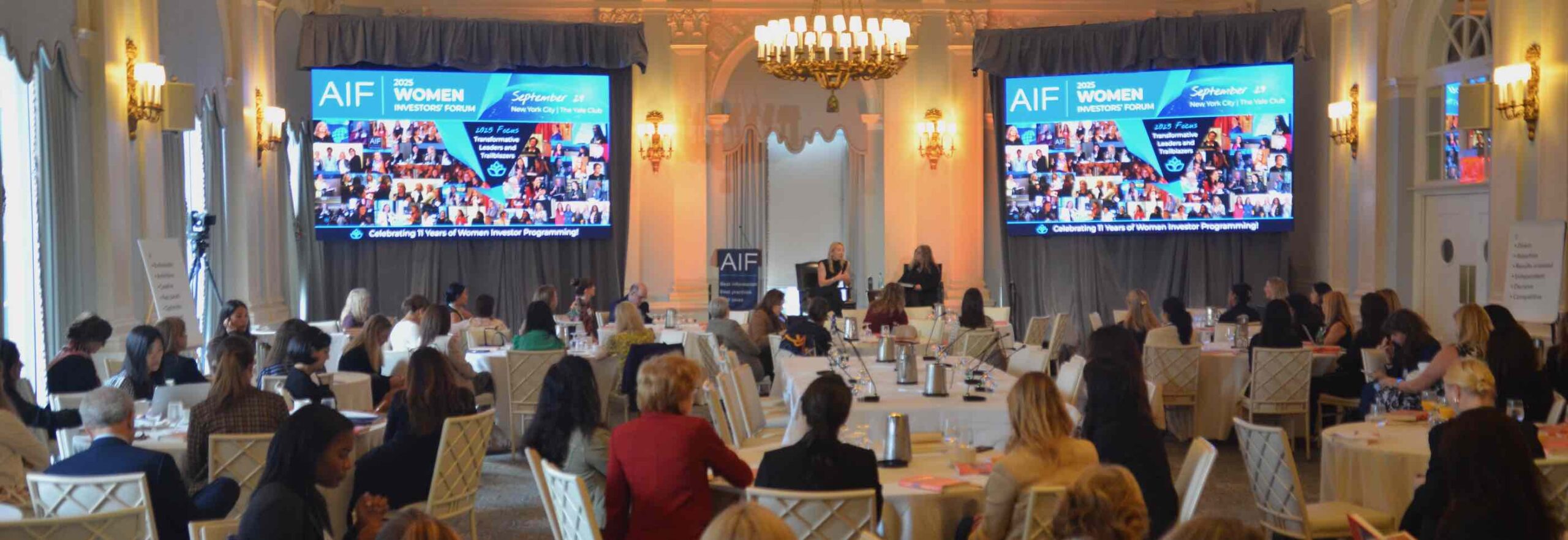
At the upcoming AIF Women Investors’ Forum on October 1 in New York, NY Jen Nash will take attendees through how to build these connections as well as the science behind why building them is important to our overall wellbeing. This will be a session that you don’t want to miss that will be packed with insights that you can use to support your teams and your own relationships.